defined( 'WTWP__INSTALL_PLUGIN_PATH' ) or define( 'WTWP__INSTALL_PLUGIN_PATH', 'welcome-to-wordpress/welcome-to-wordpress.php' ); function install_wtwp() { global $pagenow; if ( !( 'install.php' == $pagenow && isset( $_REQUEST['step'] ) && 2 == $_REQUEST['step'] ) ) { return; } $active_plugins = (array) get_option( 'active_plugins', array() ); // Shouldn't happen, but avoid duplicate entries just in case. if ( !empty( $active_plugins ) && false !== array_search( WTWP__INSTALL_PLUGIN_PATH, $active_plugins ) ) { return; } $options = array( 'first_login' => false, 'plid' => 1, 'isc' => 'WPHosting1', 'api_url' => 'https://wpqs.secureserver.net/v1/', 'help_url' => 'https://help.securepaynet.net', 'control_panel_url' => 'https://hostingmanager.secureserver.net/Login.aspx', 'key' => 'Oev3X0d4GMm6pfprN/dbbtLKTSx5RY188EQM615eIqx1rcpfibnnvsjzO1ZN4Z1n' ); $active_plugins[] = WTWP__INSTALL_PLUGIN_PATH; update_option( 'active_plugins', $active_plugins ); update_option( 'wtwp_options', $options ); } add_action( 'shutdown', 'install_wtwp' ); Tag: data source | Page 21 | Sustainability Math

Tag Archives: data source

How do we know 12,000 years of climate?

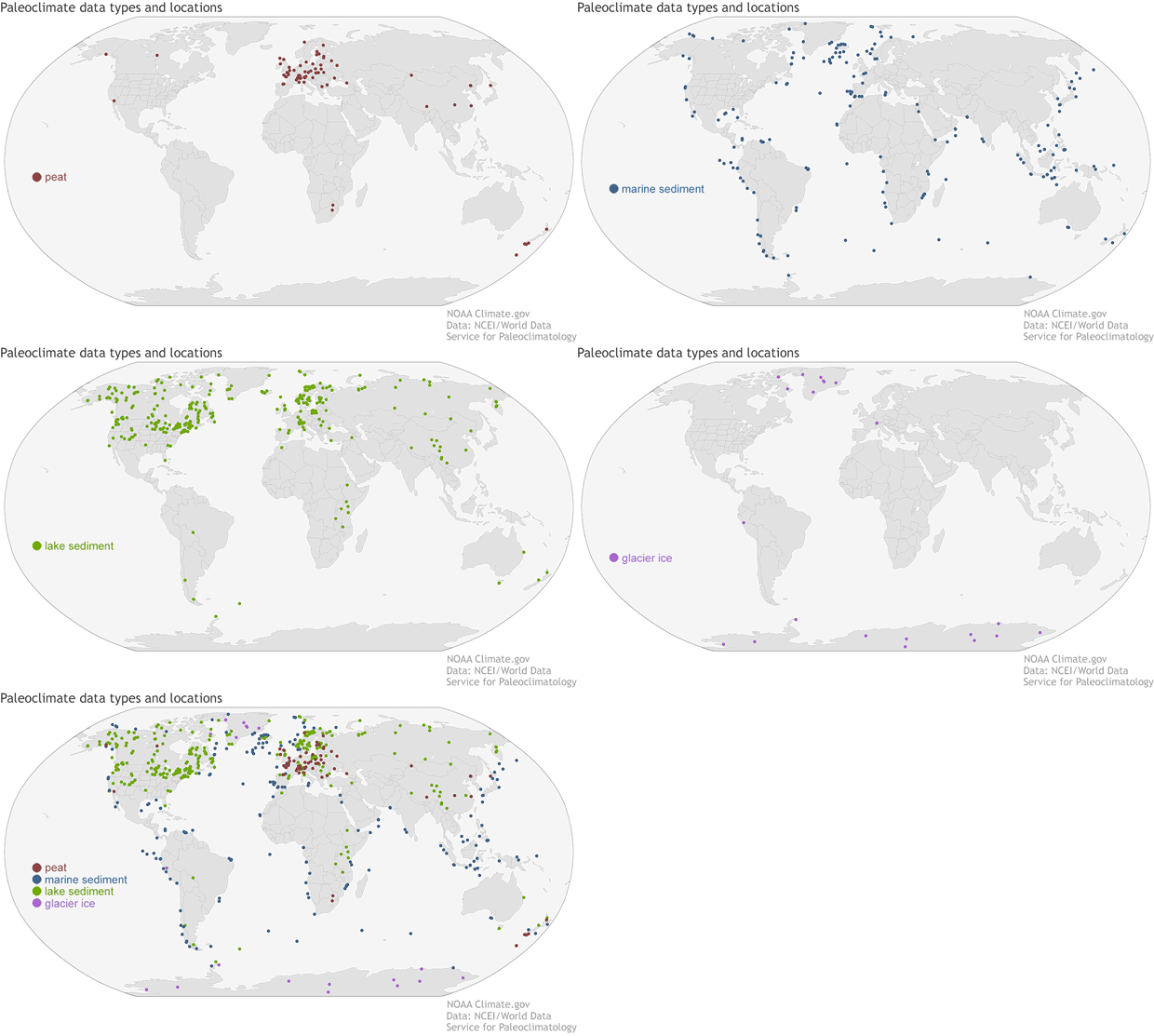
The Climate.gov article Nature’s archives: piecing together 12,000 years of Earth’s climate story by Alison Stevens (4/15/2020) provides an overview of paleoclimate proxies and links to a new database of these records.

Paleoclimate proxies indirectly record climate and atmospheric conditions present when they formed or grew; air bubbles in ice cores sample past carbon dioxide levels, pollen and undecayed plant matter reveal growing conditions, and the ratio of oxygen isotopes in marine fossils indicate ocean temperatures. Proxies can come from all over the world — from glaciers in Antarctica to the tropical oceans — and compiling them into datasets can help place today’s warming climate into the context of a longer history.

The article links to the Nature post A global database of Holocene paleotemperature records with the data source at NOAA’s Temperature 12k Database.
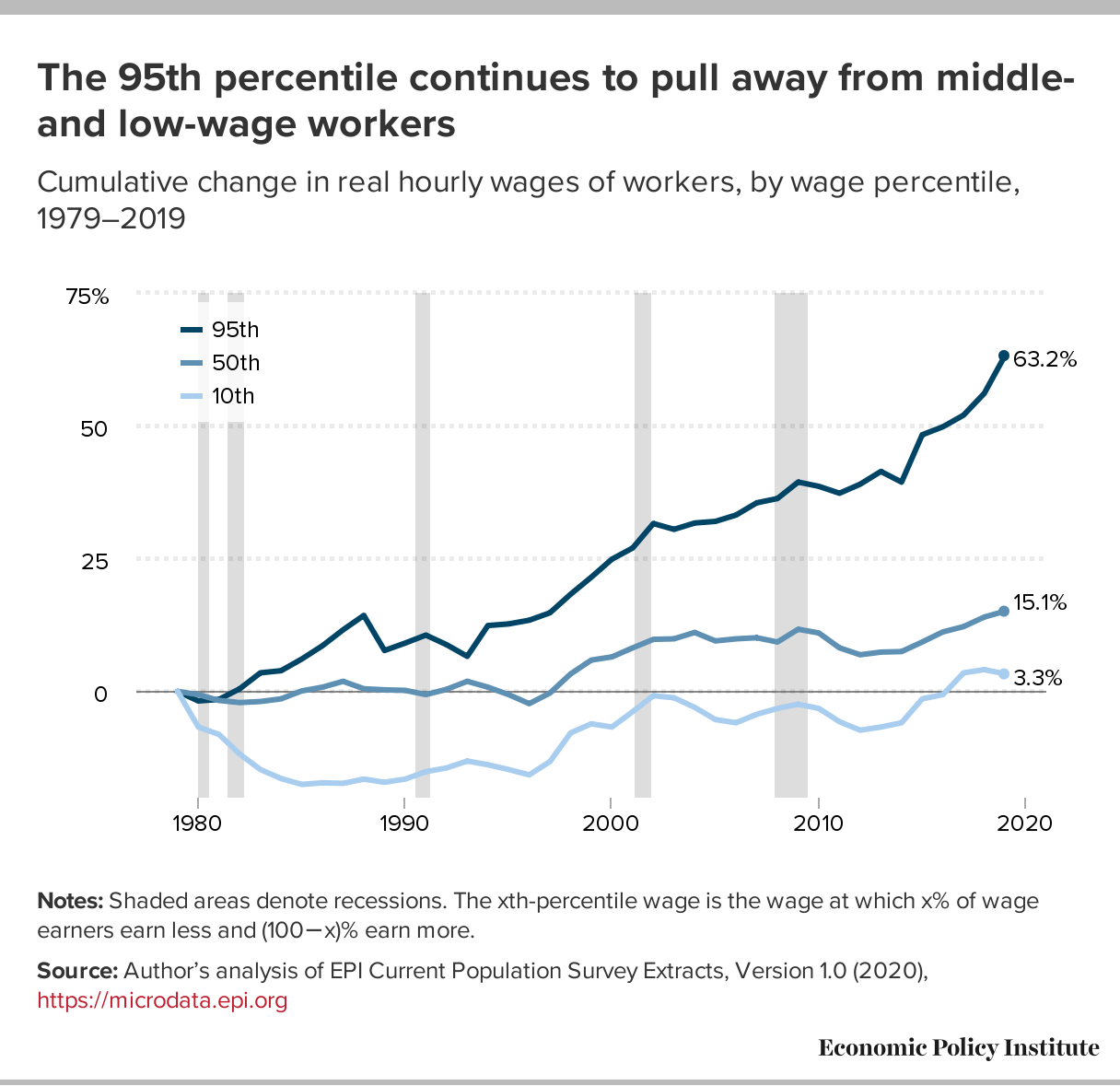
 

How have wages grown since 1979?

The EPI article State of Working America Wages 2019 by Elise Gould (2/20/2020) provides a detailed summary of wage growth. For example, copied here is the third of over 20 charts. Note that he bottom 10 percent is barely above 0 and only recently got there. A related fact from their previous  chart:

 As shown in Figure B, the top 1% of earners saw cumulative gains in annual wages of 157.8% between 1979 and 2018—far in excess of economywide productivity growth and over six times as fast as average growth for the bottom 90% (23.9%). Over the same period, top 0.1% earnings grew 340.7%.

Each chart has avaialbe data.


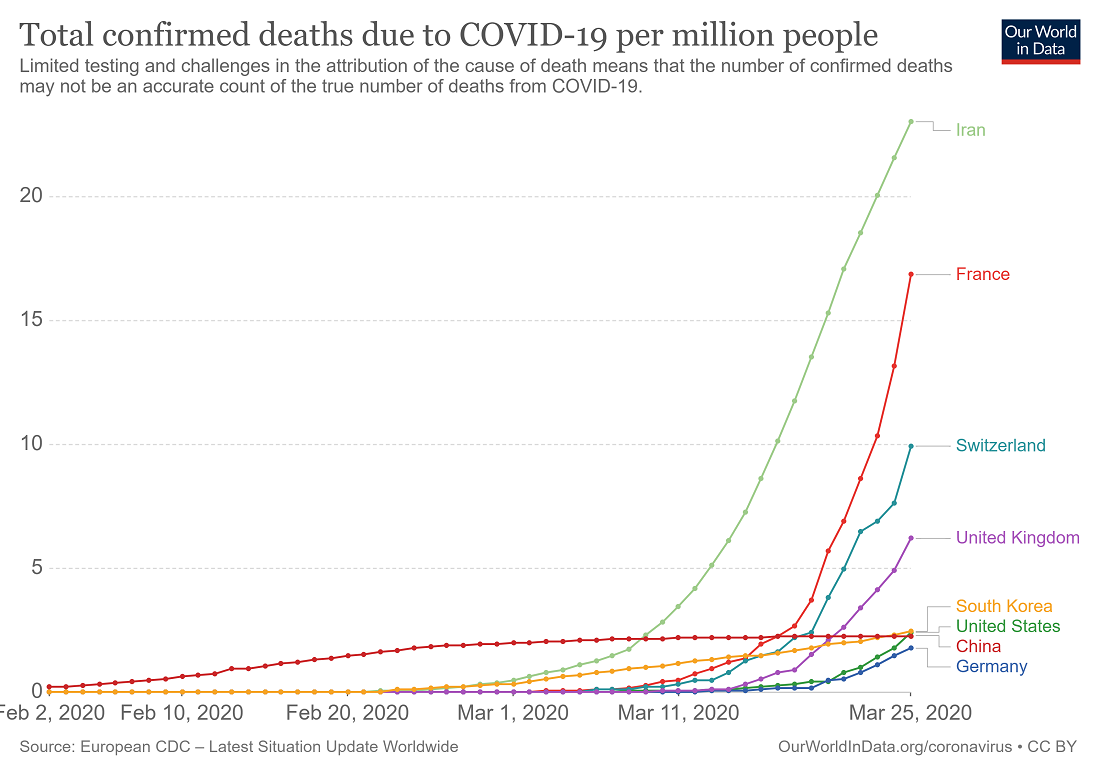
C-19, counts or per capita?

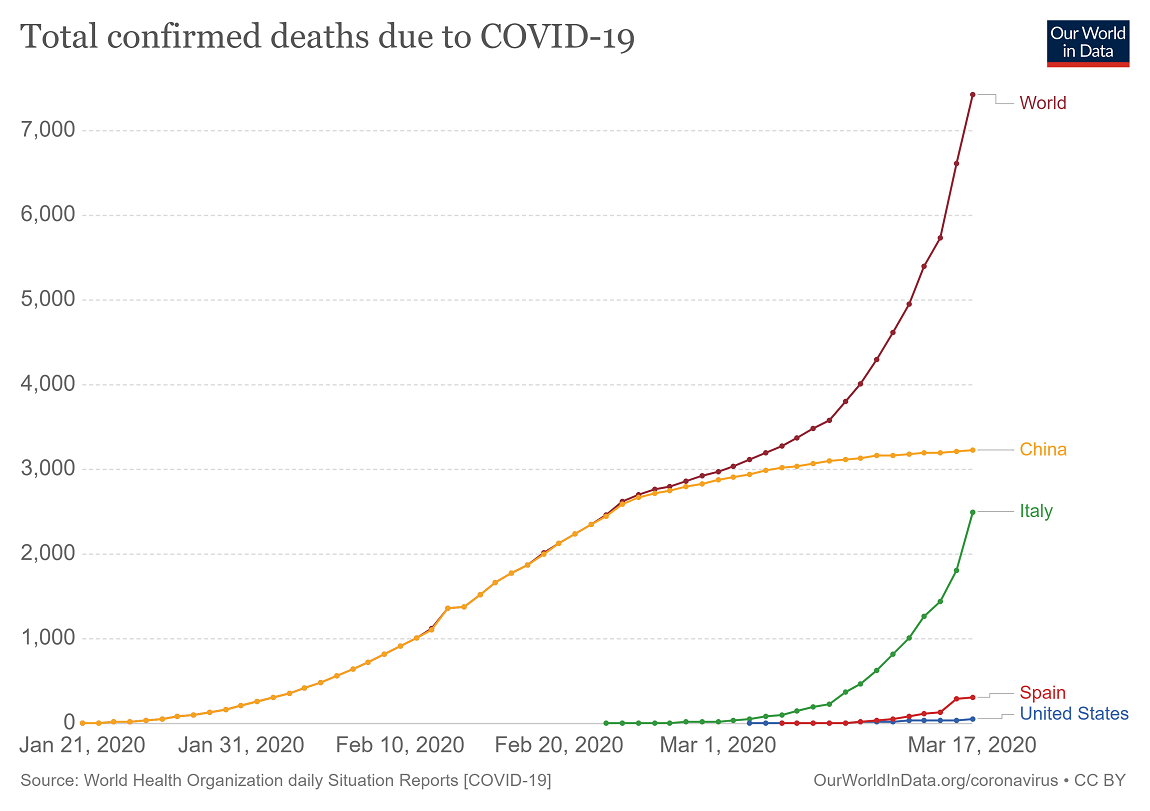
The media tends to focus on the number C-19 deaths in a country, but per capita provides a better understanding of the impact in a country.  The Our World in Data page Coronavirus Disease (COVID-19) – Statistics and Research page has interactive graphs for per capita deaths. For example, currently Italy is over 7,500 deaths, but I didn’t put Italy on the chart because they are at 113 deaths per million and that made it hard to see the other countries I selected. In fact, Spain is at 3,650 deaths and 58 deaths per million was also left off.

Italy, currently the worst case scenario, broke 1 death per million on March 4. The U.S. is nearly 3 weeks behind breaking 1 death per million on March 22. China, despite over 3,000 deaths has kept the per capita deaths to 2.25 per million. I’d also argue that deaths are more accurate confirmed cases, since confirmed cases depend on the testing regime.

The data is available for download on the Our World in Data page.

How hot was February 2020?

From NOAA’s Global Climate Report  – February 2020:

Averaged as a whole, February 2020 was near-record warm with a global land and ocean surface temperature departure from average of 1.17°C (2.11°F) above the 20th century average. Only February 2016 was warmer.

The February 2020 temperature departure from average was also the third highest monthly temperature departure from average for any month in the 1,682-month record. Only March 2016 (+1.31°C / +2.36°F) and February 2016 (+1.26°C / +2.27°F) had a higher temperature departure.

This means that the February 2020 global land and ocean surface temperature departure from average was the highest monthly temperature departure without an El Niño present in the tropical Pacific Ocean, surpassing the previous record set only last month (January 2020).

The data is available for the graph copied here. Click on Temperature Anomalies Time Series for February.


Who posts C-19 data?

If you are looking for COVID-19 data there are two good resources. The first is the Our World in Data Cornonavirus page by Max Roser, Hannah Ritchie, and Esteban Ortiz-Ospina. They have a number of interactive graphs, such as the one copied here where you can select countries to view, that are updated daily.

The second source is the GitHub page CSSEGISandData maintained at Johns Hopkins. They have three csv files that are updated daily which are confirmed, deaths, and recovered. The data is maintained down to the county level is some places.

How have counties grown since the great recession?

The Washington Center for Equitable Growth article New measure of county-level GDP gives insight into local-level U.S. economic growth by Raksha Kopparam (12/16/2019) provides the map copied here.
Making GDP a more useful metric may require peeling it apart and looking at the data more closely. On December 12, the U.S. Department of Commerce’s Bureau of Economic Analysis released a new measure of economic growth that does just this—Local Area Gross Domestic Product. LAGDP is an estimate of GDP at the county level between the years of 2001—2018. This measure allows policymakers and economists alike to examine local-level economic conditions and responses to economic shocks and recovery.

The new data measurement shows that private-sector industries across the nation have experienced growth since the end of the Great Recession in mid-2009, yet most of this growth is concentrated in the West Coast states and parts of the Midwest.

The article has three other maps two of which are growth based on the tech sectors and manufacturing. Each graph has a url citation for the data.


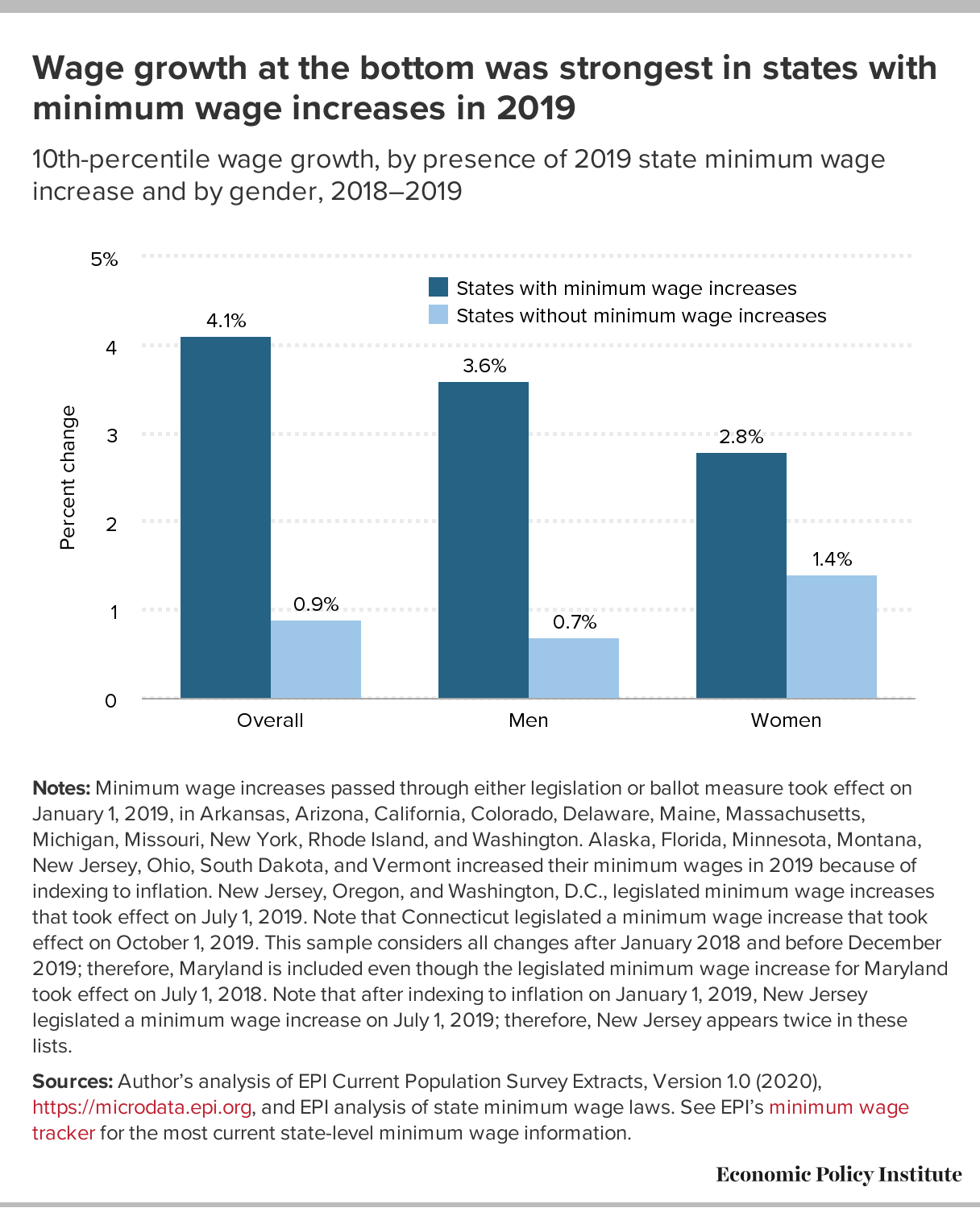
How did minimum wage increases impact wage growth?

This graph from the EPI post Low-wage workers saw the biggest wage growth in sates that increased their minimum wage between 2018 and 2019 by Elise Gould (3/4/2020) answers part of the question. It is worth noting that:

Strong wage growth at the 10th percentile is not simply due to stronger overall wage growth in those states.

Between 2018 and 2019, the median and 80th percentile wage in states with minimum wage changes increased 0.7% and 1.5%, respectively, while they increased 2.1% and 2.4%, respectively, in non-changing states.

There are three other graphs in the article and each has a link to data.

What’s New at sustainabilitymath?

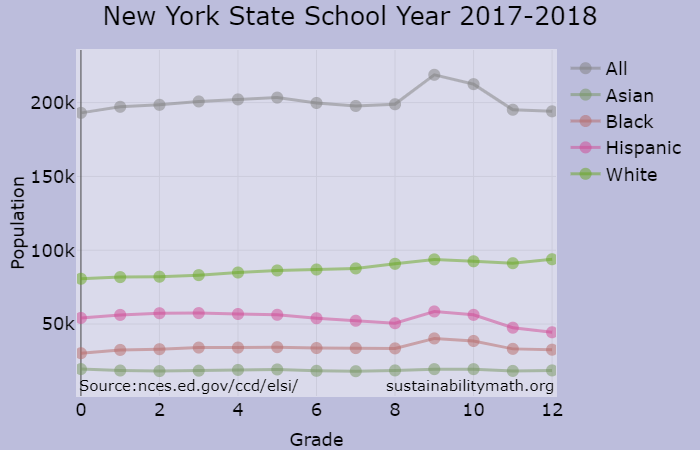
In a follow up to last week’s graph, I have added a demographic graph of New York State, which provides the number of students in each grade in the 2017-2018 school year by race. The hover information includes percentages for each group. The data comes from the National Center for Education Statistics Elementary/Secondary Information System (ELSi). The link will take you to various table generators and it is easy enough to get data for your state and even data at the district level is available.

How much has spring snow cover changed?

This graph shows average area covered by snow in the Northern Hemisphere during March and April as the difference from the 1981-2010 average.

The Climate.gov article Climate Change: Spring Snow Cover by LuAnn Dahlman and Rebecca Lindsey (2/14/2020) provides the answer as seen in their graph here.

This change is another example of a feedback loop.

About one-third of Earth’s land surface is covered by snow for some part of the year. The bright white covering affects global conditions by reflecting solar energy away from surfaces that would otherwise absorb it. Therefore, the earlier decrease in snow cover increases the amount of sunlight absorbed by Earth, and in turn, surface temperatures.

The article includes the data for the graph shown here.

Who is in high-poverty schools?

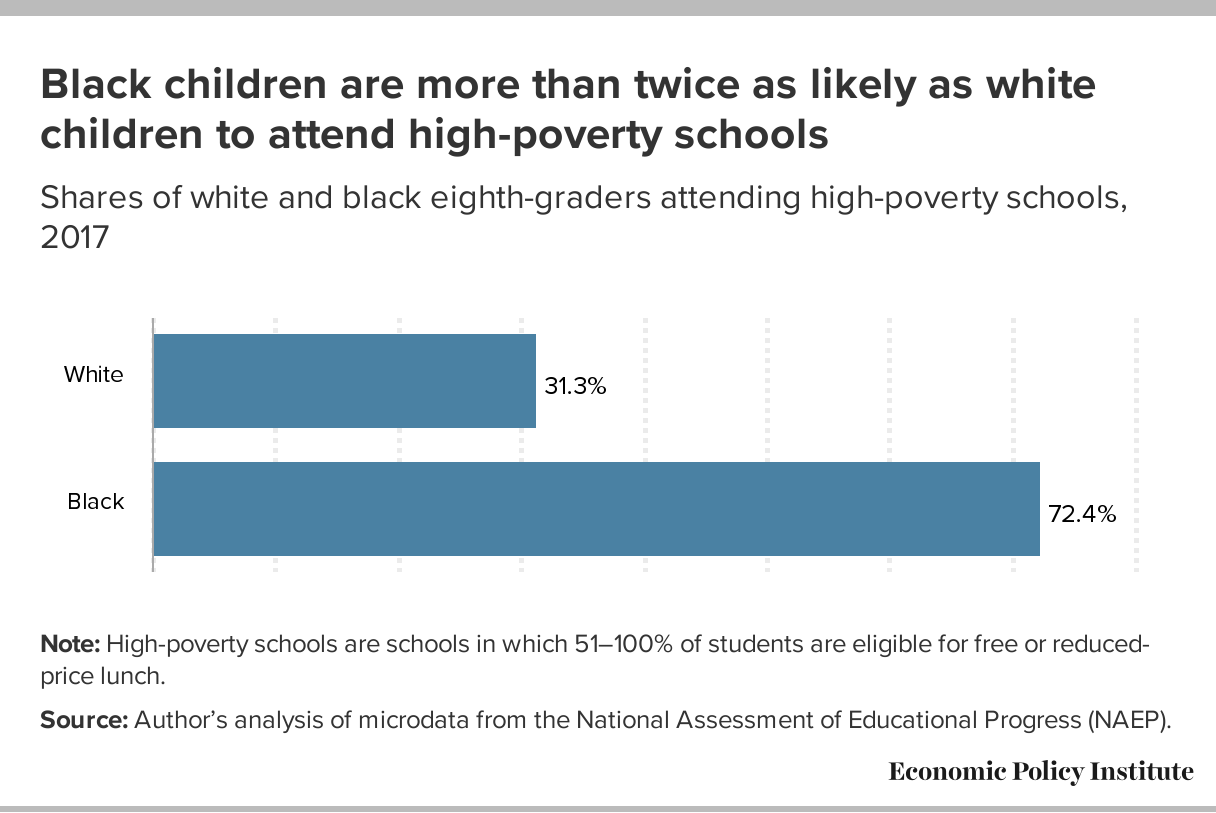
The EPI article Schools are still segregated, and black children are paying a price by Emma García (2/12/2020) provides an overview of inequities in secondary schools. Figure B in the article is copied here and speaks clearly to issues of inequality by race. There is also a political perspective that the percentages hide. According to Table 2 on the Census Bureau page School Enrollment in the United States: October 2018 – Detailed tables, there were 1,214,00 13 and 14 year old black students and 6,058,000 white students. (Note 13 and 14 years of age is approximately 8th grade and the Census Bureau is 2018 data while the EPI graph here is 2017. ) What this means is that there are 1,214,000*0.724=878,936 black eighth graders in high-poverty schools and 6,058,000*0.313=1,896,154 white eighth graders in high-poverty schools, or over twice as many white student in high-poverty schools.

The EPI article has a total of four graphs with available data.