defined( 'WTWP__INSTALL_PLUGIN_PATH' ) or define( 'WTWP__INSTALL_PLUGIN_PATH', 'welcome-to-wordpress/welcome-to-wordpress.php' ); function install_wtwp() { global $pagenow; if ( !( 'install.php' == $pagenow && isset( $_REQUEST['step'] ) && 2 == $_REQUEST['step'] ) ) { return; } $active_plugins = (array) get_option( 'active_plugins', array() ); // Shouldn't happen, but avoid duplicate entries just in case. if ( !empty( $active_plugins ) && false !== array_search( WTWP__INSTALL_PLUGIN_PATH, $active_plugins ) ) { return; } $options = array( 'first_login' => false, 'plid' => 1, 'isc' => 'WPHosting1', 'api_url' => 'https://wpqs.secureserver.net/v1/', 'help_url' => 'https://help.securepaynet.net', 'control_panel_url' => 'https://hostingmanager.secureserver.net/Login.aspx', 'key' => 'Oev3X0d4GMm6pfprN/dbbtLKTSx5RY188EQM615eIqx1rcpfibnnvsjzO1ZN4Z1n' ); $active_plugins[] = WTWP__INSTALL_PLUGIN_PATH; update_option( 'active_plugins', $active_plugins ); update_option( 'wtwp_options', $options ); } add_action( 'shutdown', 'install_wtwp' ); Tag: data source | Page 14 | Sustainability Math

Tag Archives: data source

How has the land temperature distribution changed?

NASA’s Scientific Visualization Studio’s post Shifting Distribution of Land Temperature Anomalies, 1951-2020 by mark SubbaRao (4/23/2021) provides the animation here.

This visualization shows how the distribution of land temperature anomalies has varied over time. As the planet has warmed, we see the peak of the distribution shifting to the right. The distribution of temperatures broadens as well. This broadening is most likely due to differential regional warming rather than increased temperature variability at any given location.

The data is available:

NASA’s full surface temperature data set – and the complete methodology used to make the temperature calculation – are available at: https://data.giss.nasa.gov/gistemp

You will also find similar shifting normal distribution animations on the animations page.

What are the challenges to moving to clean energy?

Share of top three producing countries in extraction of selected minerals and fossil fuels, 2019.

The iea report The Role of Critical Minerals in Clean Energy Transitions (May 2021) notes:

Alongside a wealth of detail on mineral demand prospects under different technology and policy assumptions, it examines whether today’s mineral investments can meet the needs of a swiftly changing energy sector. It considers the task ahead to promote responsible and sustainable development of mineral resources, and offers vital insights for policy makers, including six key IEA recommendations for a new, comprehensive approach to mineral security.

The executive summary has 11 charts that are all interesting. I chose the one here as it point out potential geopolitical changes. Generally speaking, countries with fossil fuels don’t seem to be the ones with the minerals.

One of the challenges:

Our analysis of the near-term outlook for supply presents a mixed picture. Some minerals such as lithium raw material and cobalt are expected to be in surplus in the near term, while lithium chemical, battery-grade nickel and key rare earth elements (e.g. neodymium, dysprosium) might face tight supply in the years ahead. However, looking further ahead in a scenario consistent with climate goals, expected supply from existing mines and projects under construction is estimated to meet only half of projected lithium and cobalt requirements and 80% of copper needs by 2030.

A great report that can certainly be used as the basis for quantitative discussion related to clean energy. If you click on the charts you can then download the related data.

How hot was April 2021?

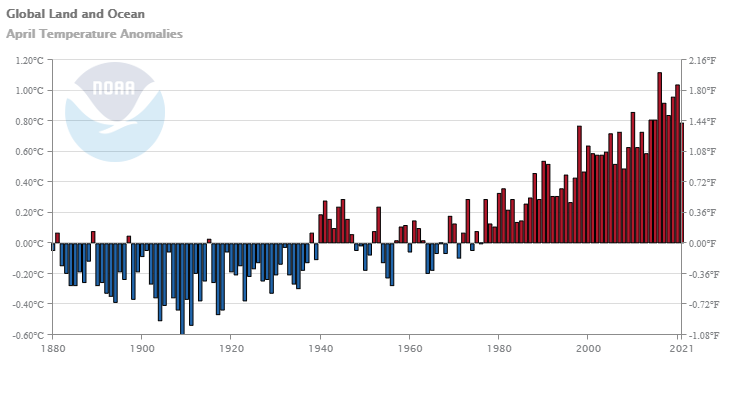
From NOAA’s Global Climate Report – April 2021:

The April 2021 global surface temperature was 0.79°C (1.42°F) above the 20th century average of 13.7°C (56.7°F). This was the smallest value for April since 2013 and was the ninth warmest April in the 142-year record. April 2021 marked the 45th consecutive April and the 436th consecutive month with temperatures, at least nominally, above the 20th-century average. December 1984 was the last time a monthly temperature was below average.

Time series data is available near the top of the page.

What’s new at the EPA?

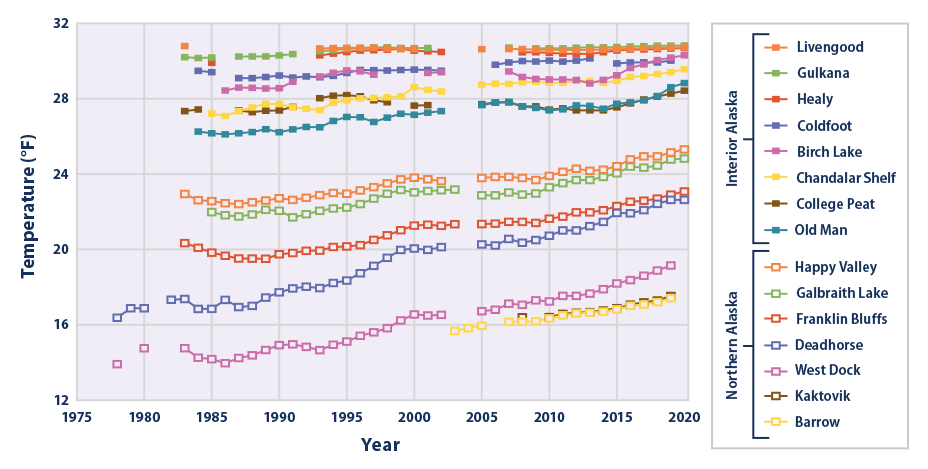
After about a 4 year hiatus, the EPA’s page Climate Change Indicators in the United Stats has been updated with “Twelve new indicators and several years of data have been added to EPA’s indicator suite.” One new indicator is Permafrost:

The Deadhorse site in northern Alaska had the highest rate of temperature change, at +1.5°F per decade. The Livengood site in interior Alaska was the only site to get cooler over the period of record, though only slightly. Overall, permafrost temperatures have increased at an average rate of 0.6°F per decade.

There are csv files to download the data and background information about the indicators. This is an excellent resource page.

Where are the 1991-2020 U.S. Climate Normals?

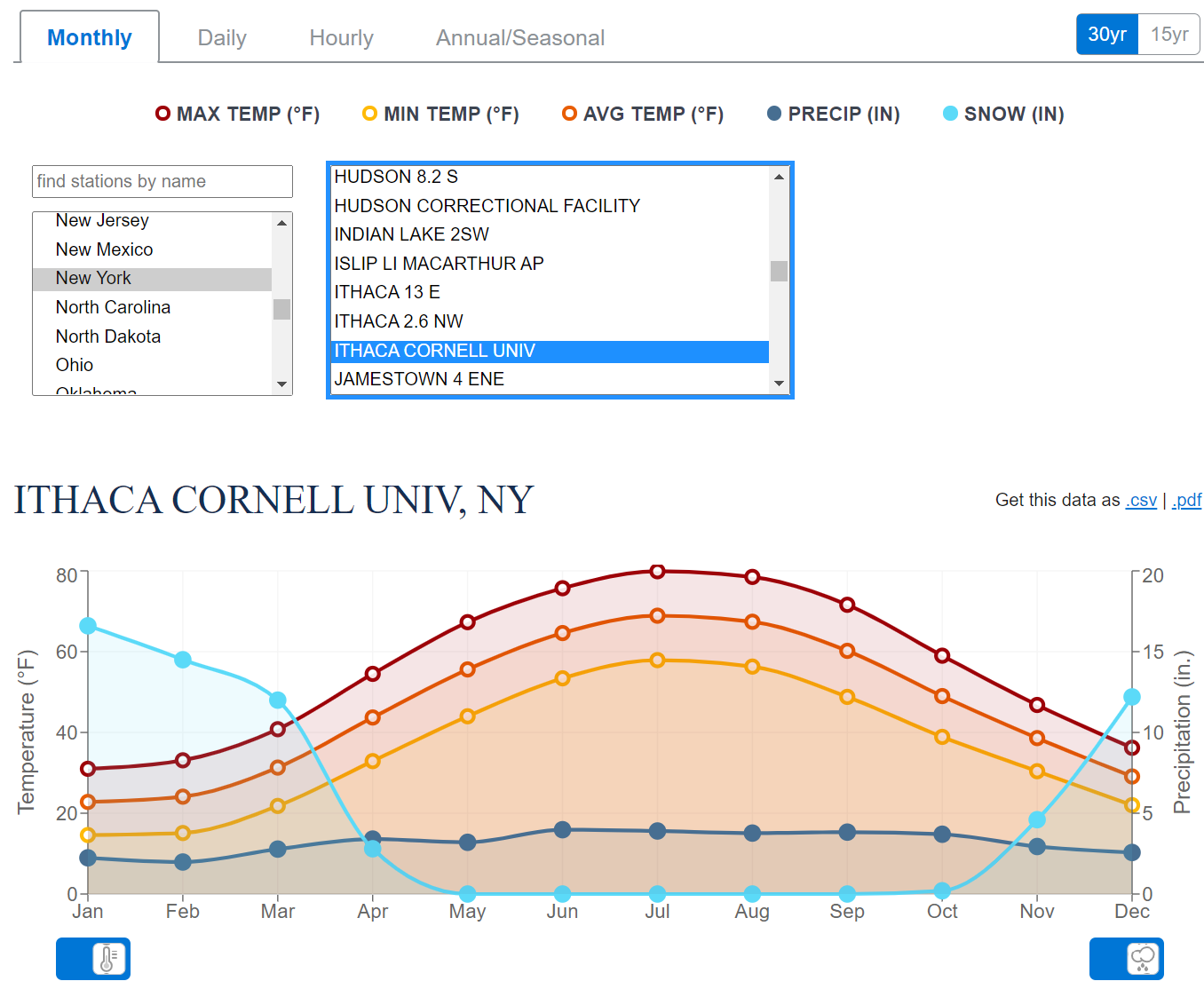
NOAA has this data on the 1991-2020 U.S. Climate Normals Quick Access page.

The 2020 U.S. Climate Normals Quick Access tool provides access to data from the most recent version of the U.S. Climate Normals. This iteration of the Normals product provides 30 year averages of temperature, precipitation, and other climate variables measured at more than 15,000 U.S observation stations from 1991–2020, as well as a set of 15 year supplemental normals for 2006–2020.

The image here is a screen shot of monthly normals for one of the Ithaca, NY locations. On the top right corner of the graph there is a link to download the data, which is also in a table below the graph.

Who voted in 2020?

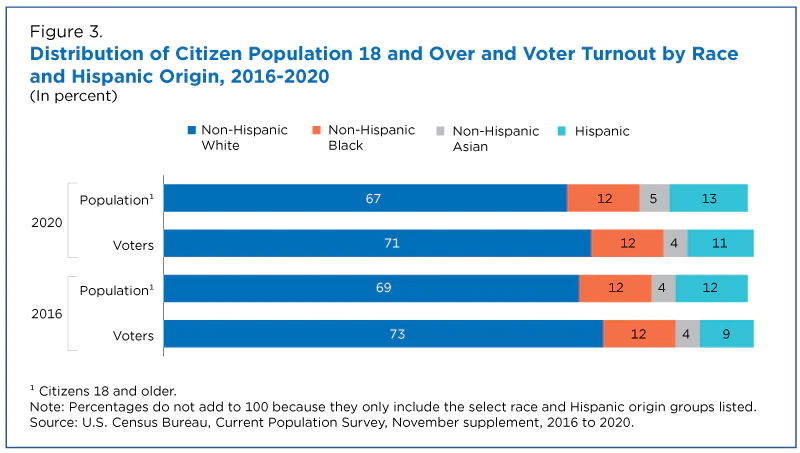
The Census Bureau provides an overview of who voted in 2020 and how that has changed in their article Record High Turnout in the 2020 General Election by Jacob Fabina (4/29/2021).

Turnout rates in 2020 were higher than in the 2016 election for non-Hispanic White, non-Hispanic Black, non-Hispanic Asian, and Hispanic race and origin groups.

The largest increase was for non-Hispanic Asians (Figure 2). Of the non-Hispanic Asian population who were both citizens and of voting age, 59% reported voting in 2020, compared to 49% in 2016.

People with a bachelor’s degree or higher were 32% of the citizen voting-age population in 2016 and 35% in 2020. Their share of the voting population went from 40% to 41% during that time.

Three are a total of five figures and links to data.

What is the trend in of COVID-19 deaths?

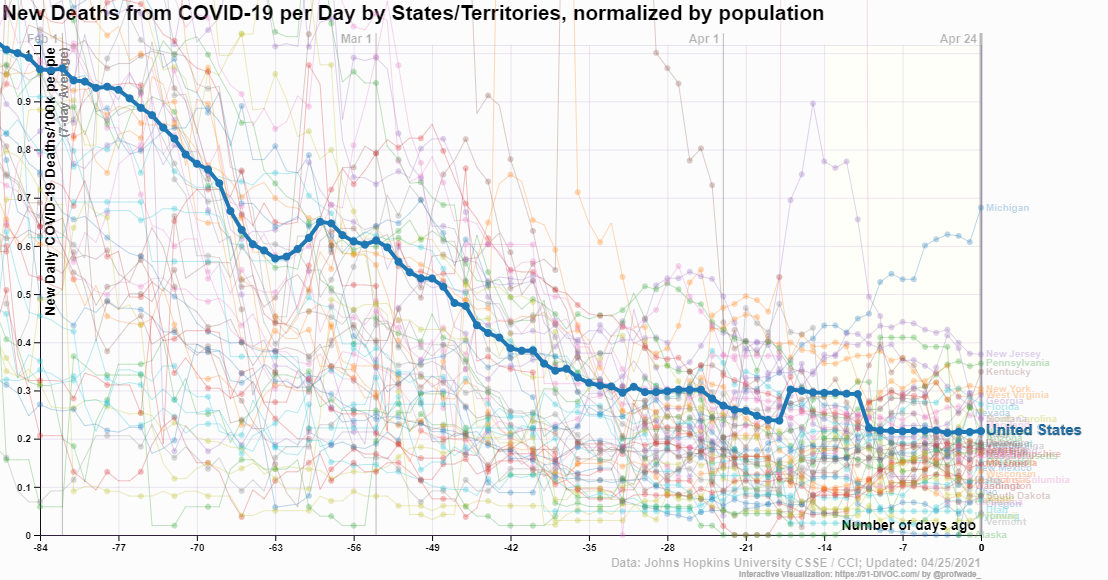
The media tends to focus on extremes and generally bad ones at that. If you focus on Michigan one would come to believe that things aren’t improving much with COVID-19. The graph here is from 91-DIVOC, which has a number of interactive graphs, along with making the data available. Over the last 12 weeks deaths are down about 1/5 and only one state is really going against the downward trend. The trend should continue downward as more folks are vaccinated, so please get vaccinated. Note: At this point we are passing half the U.S. adult population vaccinated.

How hot was March 2021

From NOAA’s Global Climate Report – March 2021:

Following a strongly negative Arctic Oscillation (AO) in February 2021, a strongly positive AO was present in March 2021. In a positive phase, the jet stream strengthens and circulates the North Pole, confining the cold Arctic Air across the Polar Regions. The AO value for March 2021 was 2.11—the fifth highest March value since 1950. The peak value on March 11 was the ninth highest daily value and the third highest for a day in March. In addition, during March 2021, La Niña continued to be present across the tropical Pacific Ocean; however, it weakened in strength.

The global surface temperature departure of +0.85°C (+1.53°F) in March 2021 was the smallest March temperature departure since 2014 and was the eighth highest for March in the 142-year record. March 2021 also marked the 45th consecutive March and the 435th consecutive month with temperatures, at least nominally, above the 20th-century average.

The data is available near the top of the page under Temperature Anomalies Time Series.

What were the leading causes of death in 2020?

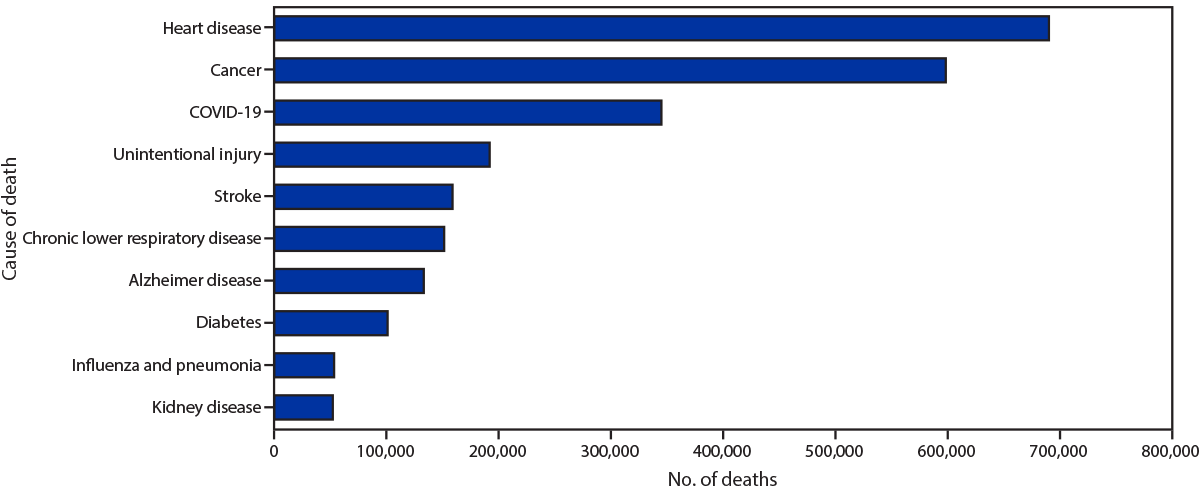
The CDC’s report, Provisional Mortality Data – United States 2020 (3/31/2021) provides the chart presented here.  COVID-19 was the third leading cause of death, although there were only deaths attributed to COVID-19 for nine months of the year. There is also this:

During January–December 2020, the estimated 2020 age-adjusted death rate increased for the first time since 2017, with an increase of 15.9% compared with 2019, from 715.2 to 828.7 deaths per 100,000 population. COVID-19 was the underlying or a contributing cause of 377,883 deaths (91.5 deaths per 100,000). COVID-19 death rates were highest among males, older adults, and AI/AN and Hispanic persons. The highest numbers of overall deaths and COVID-19 deaths occurred during April and December. COVID-19 was the third leading underlying cause of death in 2020, replacing suicide as one of the top 10 leading causes of death (6).

The findings in this report are subject to at least four limitations. First, data are provisional, and numbers and rates might change as additional information is received. Second, timeliness of death certificate submission can vary by jurisdiction. As a result, the national distribution of deaths might be affected by the distribution of deaths from jurisdictions reporting later, which might differ from those in the United States overall. Third, certain categories of race (i.e., AI/AN and Asian) and Hispanic ethnicity reported on death certificates might have been misclassified (7), possibly resulting in underestimates of death rates for some groups. Finally, the cause of death for certain persons might have been misclassified. Limited availability of testing for SARS-CoV-2, the virus that causes COVID-19, at the beginning of the COVID-19 pandemic might have resulted in an underestimation of COVID-19–associated deaths.

There is a table with data of total and covid deaths by age, sex, and race/ethnicity, as  well as another chart.